Wednesday, January 16, 2008
High Brow
If you have $1200 burning a hole in your pocket, this Clean Energy Roundtable in La Jolla, April 8-10, looks upbeat and informative.

Saturday, December 22, 2007
Hydrogen Highway

The governor of California has proclaimed that there shall be a hydrogen filling station every 20 miles north south along the hydrogen highway. There are twenty filling stations open now, 14 clustered around Los Angeles County, and 6 in the San Francisco vicinity. Ten more will open in early 2008. Most of the hydrogen for these filling station is created by reforming natural gas and then trucked to the filling station. The reforming process releases CO2 into the atmosphere, and so do the trucks. The longer term solution will be on-site hydrogen generation at the filling station, using renewable energy to create electricity which is then used to split water using electrolysis.
Thursday, December 13, 2007
A Dozen Hydrogen-powered Cars

GM recently announced their Sequel hydrogen-powered car. I visited the Sequel web site and applied for the pilot program via a long questionnaire. I was notifed immediately that i did not qualify, and later learned from Marc Puckett at United Solar of America that only applicants in Burbank are being considered. I also learned that there are hydrogen bus test programs underway in Palm Springs, Vancouver, and Iceland,
Wondering if GM is the first car manufacturer here in the USA to announce a hydrogen car, I looked in wikipedia expecting to find only a few concept cars. There are a dozen some of which are in production. BMW, Fiat, Chrysler, Mercedes Benz, Peugeot, and several other manufacturers have created one or more models of hydrogen cars.
If you live in Burbank, you can check your eligibility for the Project Driveaway Test program at the Chevrolet web site.
Thursday, December 6, 2007
Man-made Fuel
Synthetic genomics is a new research area within the field of synthetic biology that uses gene therapy, genetic modification, or genetic fabrication to create a new life form, ie., a life form that does not exist in nature. In addition to using custom-designed base pair series, genomicists believe it may be possible to use genetic codes other than the four base pairs of DNA that compose all DNA today.
Life forms of immediate interest are those that can be used for fuel products or to process undesirable materials such as sequestered carbon.
With today's genetics technologies, it is straight-forward to construct long base pair chains cheaply and accurately. Researchers can then experiment with, or computationally simulate, these new DNA to see what useful purpose the life form might provide. Scientists believe that there will be a large number of commercially viable applications that will re-invent the production of energy, chemicals and pharmaceuticals, and potentially assist with environmental remediation.
Synthetic Genomics Inc. (SG) is a privately-held company with offices in Rockville, Maryland and La Jolla, California. SG is one of the first companies to attempt to develop and commercialize synthetic genomic processes and naturally occurring processes for the production of clean, renewable alternative energy solutions.
Life forms of immediate interest are those that can be used for fuel products or to process undesirable materials such as sequestered carbon.
With today's genetics technologies, it is straight-forward to construct long base pair chains cheaply and accurately. Researchers can then experiment with, or computationally simulate, these new DNA to see what useful purpose the life form might provide. Scientists believe that there will be a large number of commercially viable applications that will re-invent the production of energy, chemicals and pharmaceuticals, and potentially assist with environmental remediation.
Synthetic Genomics Inc. (SG) is a privately-held company with offices in Rockville, Maryland and La Jolla, California. SG is one of the first companies to attempt to develop and commercialize synthetic genomic processes and naturally occurring processes for the production of clean, renewable alternative energy solutions.
Tuesday, November 27, 2007
High-altitude Wind Power
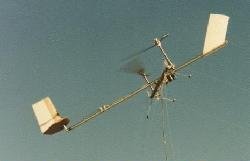
Flying electric generators, sometimes called tethered rotorcraft, use wind power to keep themselves airborne and at the same time to generate electricity. Operating at altitudes above 15,000 feet, the northern and southern hemisphere jetstreams provide the ideal strong reliable wind conditions for rotorcraft.
High altitude Rotorcraft solve the visual and noise problems inherent in terrestrial wind turbine farms. High altitude rotorcraft are also less likely to strike birds and bats.
During lightening storms, rotorcraft are winched back down to earth, causing a disruption in power generation. To avoid wind turbulence, rotorcraft can be moved to a different altitude much like an airliner that selects an altitude to achieve the smoothest possible ride.
Research is required to design, develop, and test the best tether. Tethers are many miles in length, must be lightweight so that they can be supported by the rotorcraft, and must be capable of transmitting high voltage electrical current down to earth.
Rotorcraft will be primarily deployed in existing no-fly zones, outside of aircraft flight paths, and away from population centers.
Sky Wind Power in San Diego is actively developing a 240kW rotorcraft and new tether technology. Current focus is on a four rotor design where each rotor has 2 blades. The best available tether technology uses insulated aluminum conductors in a vectran carbon composite shield. A series of test flights is planned to determine the optimum altitude and proximity to the jet stream.
Tuesday, November 20, 2007
Capturing Waste Heat
Many processes generate heat as a by-product. Most often the heat by-product is dissapated and thus wasted. Example processes that generate waste heat include: incineration, electricity generation, water heating, manufacturing, central heating, and turning an engine.
If waste heat could be captured and stored, it could potentially power other processes at very low cost. Hi-Z has developed a number of thermoelectric modules (TM) that convert low-grade waste heat into electricity.
The TM resumbles a hot pan holder. Composed of bismuth telluride-based alloys, Hi-Z's TM requires a heat flux of approximately 8 watts per cm2 to generate electricity. At 200°C, the Hi-Z TM converts 5% of the thermal energy that passes through it into electricity, generating 14 watts. It will work without maintenance for tens of thousands of hours when properly installed. It is most effective when tightly compressed and electrically insulated between a heat source and a heat sink. A spring-loaded pressure plate that allows for thermal expansion is ideal.
The result is a TM layer in close surface contact with a heat emitter. The TM will then produce electricity whenever there is heat.
Thursday, November 15, 2007
Efficient Hydrogen Generation
The World Business Council on Sustainable Development (WBCSD) publishes an amazing number of high-quality reports and E-newsletters. One of today's E-newsletters included a story about Pennsylvania researchers who have developed an efficient process for generating hydrogen from biodegradable organic material.
In a process called electrohydrogenesis, an electrical charge is applied in a microbial fuel cell. The energy in the hydrogen created is nearly 3x that of the electrical charge applied.
Here's a link to the full text article .
In a process called electrohydrogenesis, an electrical charge is applied in a microbial fuel cell. The energy in the hydrogen created is nearly 3x that of the electrical charge applied.
Here's a link to the full text article .
Subscribe to:
Posts (Atom)

