The 37th annual Solar Conference, SOLAR 2008, will be held in San Diego, 3-8 May 2008 at the Town and Country Resort. That's the older convention center in Mission Valley, just a few miles north east of the airport.
Highlights of the conference will include, keynotes from Van Jones and Senator Gary Hart, and sessions on policy, marketing, technology, community, and best practices for installers.
The Saturday and Sunday all day events are ASES Caucuses, workshops, public-welcome exhibits (200 booths), film screenings, tours, and a plenary session. Monday thru Thursday sessions are open only to registered attendees and are primarily forums and technical sessions.
The two major hurdles blocking widespread adoption of solar panels are the high cost of installation and the absence of government tax incentives. These issues will undoubted be discussed in detail.
Saturday, February 16, 2008

Sunday, February 10, 2008
San Diego's ISE Corporation designs and builds hybrid-electric drive systems for heavy-duty vehicles such as buses and trams. Since its inception in 1994, ISE has converted a dozen types of large transportation vehicles to run on electric, hybrid-electric, or fuel cell power.
ISE also sells individual subsystems and components, including integrated battery and ultracapacitor packs, motive drive subsystems, auxiliary power units, electrically-driven accessories, and hybrid vehicle control systems.
I learned recently that electric vehicles such as the Chevy Volt are an ideal stepping stone to the hydrogen economy. The Volt is an electrical vehicle with as gas-powered electrical generator backup that can extend the Volt's range beyond 100 miles. The backup could just as easily be a tank of hydrogen with a fuel cell or some other renewable zero emissions system.
In light of this good news, ISE is paving the way to the hydrogen economy future for mass transit. For more information, visit the ISE web site, www.isecorp.com
ISE also sells individual subsystems and components, including integrated battery and ultracapacitor packs, motive drive subsystems, auxiliary power units, electrically-driven accessories, and hybrid vehicle control systems.
I learned recently that electric vehicles such as the Chevy Volt are an ideal stepping stone to the hydrogen economy. The Volt is an electrical vehicle with as gas-powered electrical generator backup that can extend the Volt's range beyond 100 miles. The backup could just as easily be a tank of hydrogen with a fuel cell or some other renewable zero emissions system.
In light of this good news, ISE is paving the way to the hydrogen economy future for mass transit. For more information, visit the ISE web site, www.isecorp.com
Wednesday, February 6, 2008
Solar Water Heating
There was a surge (:-) of solar-powered water heating (SPWH) in the US twenty years ago, but policy makers discontinued the incentives and SPWH fell out of favor. Some countries in Europe, require all new construction houses to install solar-powered water heaters. Why burn expensive non-renewable fossil fuels to heat your water when the sun is shining?
There has been a resurgence of interest in SPWH here in California. A few of the companies in San Diego that will install a SPWH systen are:
There has been a resurgence of interest in SPWH here in California. A few of the companies in San Diego that will install a SPWH systen are:
- Advanced Solar Technologies
- Butler Sun Solutions
- Horizon Solar Systems
- Mark Naylor Solar Specialists
- Natural Energy Systems
- Son Energy Solar Systems
- Suntrek Industries
Wednesday, January 16, 2008
High Brow
If you have $1200 burning a hole in your pocket, this Clean Energy Roundtable in La Jolla, April 8-10, looks upbeat and informative.
Saturday, December 22, 2007
Hydrogen Highway

The governor of California has proclaimed that there shall be a hydrogen filling station every 20 miles north south along the hydrogen highway. There are twenty filling stations open now, 14 clustered around Los Angeles County, and 6 in the San Francisco vicinity. Ten more will open in early 2008. Most of the hydrogen for these filling station is created by reforming natural gas and then trucked to the filling station. The reforming process releases CO2 into the atmosphere, and so do the trucks. The longer term solution will be on-site hydrogen generation at the filling station, using renewable energy to create electricity which is then used to split water using electrolysis.
Thursday, December 13, 2007
A Dozen Hydrogen-powered Cars

GM recently announced their Sequel hydrogen-powered car. I visited the Sequel web site and applied for the pilot program via a long questionnaire. I was notifed immediately that i did not qualify, and later learned from Marc Puckett at United Solar of America that only applicants in Burbank are being considered. I also learned that there are hydrogen bus test programs underway in Palm Springs, Vancouver, and Iceland,
Wondering if GM is the first car manufacturer here in the USA to announce a hydrogen car, I looked in wikipedia expecting to find only a few concept cars. There are a dozen some of which are in production. BMW, Fiat, Chrysler, Mercedes Benz, Peugeot, and several other manufacturers have created one or more models of hydrogen cars.
If you live in Burbank, you can check your eligibility for the Project Driveaway Test program at the Chevrolet web site.
Thursday, December 6, 2007
Man-made Fuel
Synthetic genomics is a new research area within the field of synthetic biology that uses gene therapy, genetic modification, or genetic fabrication to create a new life form, ie., a life form that does not exist in nature. In addition to using custom-designed base pair series, genomicists believe it may be possible to use genetic codes other than the four base pairs of DNA that compose all DNA today.
Life forms of immediate interest are those that can be used for fuel products or to process undesirable materials such as sequestered carbon.
With today's genetics technologies, it is straight-forward to construct long base pair chains cheaply and accurately. Researchers can then experiment with, or computationally simulate, these new DNA to see what useful purpose the life form might provide. Scientists believe that there will be a large number of commercially viable applications that will re-invent the production of energy, chemicals and pharmaceuticals, and potentially assist with environmental remediation.
Synthetic Genomics Inc. (SG) is a privately-held company with offices in Rockville, Maryland and La Jolla, California. SG is one of the first companies to attempt to develop and commercialize synthetic genomic processes and naturally occurring processes for the production of clean, renewable alternative energy solutions.
Life forms of immediate interest are those that can be used for fuel products or to process undesirable materials such as sequestered carbon.
With today's genetics technologies, it is straight-forward to construct long base pair chains cheaply and accurately. Researchers can then experiment with, or computationally simulate, these new DNA to see what useful purpose the life form might provide. Scientists believe that there will be a large number of commercially viable applications that will re-invent the production of energy, chemicals and pharmaceuticals, and potentially assist with environmental remediation.
Synthetic Genomics Inc. (SG) is a privately-held company with offices in Rockville, Maryland and La Jolla, California. SG is one of the first companies to attempt to develop and commercialize synthetic genomic processes and naturally occurring processes for the production of clean, renewable alternative energy solutions.
Tuesday, November 27, 2007
High-altitude Wind Power
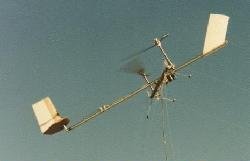
Flying electric generators, sometimes called tethered rotorcraft, use wind power to keep themselves airborne and at the same time to generate electricity. Operating at altitudes above 15,000 feet, the northern and southern hemisphere jetstreams provide the ideal strong reliable wind conditions for rotorcraft.
High altitude Rotorcraft solve the visual and noise problems inherent in terrestrial wind turbine farms. High altitude rotorcraft are also less likely to strike birds and bats.
During lightening storms, rotorcraft are winched back down to earth, causing a disruption in power generation. To avoid wind turbulence, rotorcraft can be moved to a different altitude much like an airliner that selects an altitude to achieve the smoothest possible ride.
Research is required to design, develop, and test the best tether. Tethers are many miles in length, must be lightweight so that they can be supported by the rotorcraft, and must be capable of transmitting high voltage electrical current down to earth.
Rotorcraft will be primarily deployed in existing no-fly zones, outside of aircraft flight paths, and away from population centers.
Sky Wind Power in San Diego is actively developing a 240kW rotorcraft and new tether technology. Current focus is on a four rotor design where each rotor has 2 blades. The best available tether technology uses insulated aluminum conductors in a vectran carbon composite shield. A series of test flights is planned to determine the optimum altitude and proximity to the jet stream.
Tuesday, November 20, 2007
Capturing Waste Heat
Many processes generate heat as a by-product. Most often the heat by-product is dissapated and thus wasted. Example processes that generate waste heat include: incineration, electricity generation, water heating, manufacturing, central heating, and turning an engine.
If waste heat could be captured and stored, it could potentially power other processes at very low cost. Hi-Z has developed a number of thermoelectric modules (TM) that convert low-grade waste heat into electricity.
The TM resumbles a hot pan holder. Composed of bismuth telluride-based alloys, Hi-Z's TM requires a heat flux of approximately 8 watts per cm2 to generate electricity. At 200°C, the Hi-Z TM converts 5% of the thermal energy that passes through it into electricity, generating 14 watts. It will work without maintenance for tens of thousands of hours when properly installed. It is most effective when tightly compressed and electrically insulated between a heat source and a heat sink. A spring-loaded pressure plate that allows for thermal expansion is ideal.
The result is a TM layer in close surface contact with a heat emitter. The TM will then produce electricity whenever there is heat.
Thursday, November 15, 2007
Efficient Hydrogen Generation
The World Business Council on Sustainable Development (WBCSD) publishes an amazing number of high-quality reports and E-newsletters. One of today's E-newsletters included a story about Pennsylvania researchers who have developed an efficient process for generating hydrogen from biodegradable organic material.
In a process called electrohydrogenesis, an electrical charge is applied in a microbial fuel cell. The energy in the hydrogen created is nearly 3x that of the electrical charge applied.
Here's a link to the full text article .
In a process called electrohydrogenesis, an electrical charge is applied in a microbial fuel cell. The energy in the hydrogen created is nearly 3x that of the electrical charge applied.
Here's a link to the full text article .
Wednesday, November 14, 2007
Surf's Up

For most of its history Float Inc has developed large pneumatically-stabilized off-shore floating platforms for various industrial and military applications. Float is now developing technology that uses the movement of ocean waves to generate electricity. Here's an excerpt from Float's web site:
Wave energy is, in effect, a stored and concentrated form of solar energy, since the winds that produce waves are caused by pressure differences in the atmosphere arising from solar radiation. Waves transmit this energy thousands of miles with minimal loss. Wave size is a function of the wind's speed, how long it blows, and fetch, which is the distance over which it blows.
The Oscillating Water Column (OWC) has been shown to work well in calm conditions and in high-surf conditions. It also has a minimal number of moving parts so it can survive in salty, wet condition for a long time. An OWC is a vertical hollow pipe or column that is partially submerged and held stationary. As the water level inside the column goes up and down with wave movement, the air in the upper end of the column enters and leaves. It is this air movement that is captured to turn a turbine.
Float Inc.'s floating platform product's perimeter is coincidentally lined with columns that attenuate the water motion and stabilize the platform. These existing columns then serve double duty as electrical generators.
Monday, November 12, 2007
Alternative Fuels
On November 8th, the California Center for Sustainable Energy (CCSE) hosted a small alternative fuels conference organized by the San Diego Regional Clean Fuels Coalition and the San Diego Regional Sustainability Partnership Transportation Committee. The morning agenda was excellent.
Joanna Underwood convincingly argued in her keynote that natural gas is the only sensible stepping stone to a hydrogen economy. She noted that natural gas is H4C, which is mostly hydrogen, and that natural gas cars will run on hydrogen when it becomes cheap and plentiful. "We went from Kitty Hawk to the moon in 50 years".
Dave Richards argued in favor of bio diesel, but, in my opinion the pollutants resulting from combustion, although mitigated, are just not worth it.
Subscribe at www.energycenter.org to receive calender alerts about other upcoming conferences and events.
Joanna Underwood convincingly argued in her keynote that natural gas is the only sensible stepping stone to a hydrogen economy. She noted that natural gas is H4C, which is mostly hydrogen, and that natural gas cars will run on hydrogen when it becomes cheap and plentiful. "We went from Kitty Hawk to the moon in 50 years".
Dave Richards argued in favor of bio diesel, but, in my opinion the pollutants resulting from combustion, although mitigated, are just not worth it.
Subscribe at www.energycenter.org to receive calender alerts about other upcoming conferences and events.
Wednesday, November 7, 2007
Survey of San Diego CleanTech
At a recent Greenovations meeting at UCSD I met Nathan Owens, the lead author of a cleantech report commissioned by the City of San Diego. In the report, Nathan establishes clean technology criteria, and then describes 143 companies that meet his criteria. The excellent report is on the www.sandiego.gov site here .
Tuesday, November 6, 2007
Urban Energy Plants
San Diego Gas & Electric (SDGE) has set a goal of delivering 20% of its power from renewable sources by the year 2010. Toward this goal, SDGE has contracted with Bull Moose Energy to purchase 20 megawatts of electricity in 2008, sufficient power for 20,000 homes. Bull Moose will create the power by gasifying wood that would otherwise have been dumped in a landfill.
Bull Moose Energy was founded in 2005 to develop alternative energy power production systems. Bull Moose's first eco-friendly facility will use biomass waste products to produce electrical power. Several hundred tons of green waste per day will be gasified. The 20-acre facility will be located in Otay Mesa, a suburb of San Diego that is targeted for commercial revitalization. Additional installations are being planned for municipalities throughout the U.S.
The Bull Moose biomass energy production system reportedly burns cleaner than natural gas using fuel that is comprised primarily of green waste, such as tree trimmings.
Morgan Stanley recently committed to investing up to $60 million in Bull Moose to finance the development of next generation biomass power production plants near urban centers.
Sunday, November 4, 2007
Energy Management Systems
Wikipedia defines an Energy Management Systems as, "a system to control, monitor, and optimize the generation and flow of Electric Power." Founded in 2002, San Diego-based P&E Automation is a leader in the EMS field. P&E provides consulting services for: energy audits, energy conservation engineering, feasibility studies for solar & co-generation power production, LEED certification, measurement & verification, and systems integration. Past P&E projects include energy use analysis, designing conservation systems, integration, installation, commissioning, and marketing campaigns for energy management technologies.
P&E has also created a web-based EMS Suite focused on facility Intelligence. Their most recent product is EnergyConsole, an end-to-end hosted EMS that provides building automation, optimization, energy accounting, and equipment diagnostics for commercial, industrial, and government facilities. EnergyConsole will also aggregate and summarize information for geographically dispersed facilities.
P&E has also created a web-based EMS Suite focused on facility Intelligence. Their most recent product is EnergyConsole, an end-to-end hosted EMS that provides building automation, optimization, energy accounting, and equipment diagnostics for commercial, industrial, and government facilities. EnergyConsole will also aggregate and summarize information for geographically dispersed facilities.
Thursday, November 1, 2007
An Auto Automobile

This 3-seater autonomous vehicle from French car maker Venturi requires no gas, no hydrogen, and no wall socket. It charges itself via solar panels on the roof and/or via a deployable wind turbine. Its called the Eclectic.
Falling into the category of vehicles known as Neighborhood Electric Vehicles, the Eclectic NEV has a range of 50KM (31 miles) on a full charge and an maximum speed of 50KMH. During a full day of sunlight, roof-mounted solar panel will generate and store sufficient power to propel the vehicle 7KM (4.4 miles). The external wind turbine will generate and store sufficient power to propel the vehicle 15KM. If you need more range than that, you can plug it in to give the NiMH batteries a full charge. The vehicle weighs 880 pounds and will cost € 24,000 plus VAT when the first 200 go on sale in March, 2008.
Monday, October 29, 2007
Cutting Energy Waste in Unoccupied Rooms
Energy Eye has developed a wireless energy management system for installation in hotel rooms, apartments, classrooms, offices, or any other building where temperature controls are used. The Energy Eye system utilizes a passive infrared sensor, a motion sensor, and a door sensor to determine if a room is occupied or not. If the door sensor detects that the door was propped open, the sensor notifies the thermostat to shut down. When the system detects that a room is unoccupied, a signal is sent to the thermostat to reduce heating / cooling to a pre-determined level.
Since it is less expensive for a utility company to reduce power consumption than it is to build another power plant or purchase additional power from out of the area, utility companies endorse Energy Eye. Energy Eye boasts energy savings of up to 40% and break even in 6-24 months.
Since it is less expensive for a utility company to reduce power consumption than it is to build another power plant or purchase additional power from out of the area, utility companies endorse Energy Eye. Energy Eye boasts energy savings of up to 40% and break even in 6-24 months.
Thursday, October 25, 2007
Solar Conference 2007
Solar Energy Conference 2007 in San Diego was hosted by the California Center for Sustainable Energy . Presenter slides are here . Highlights of this well-organized high-quality event included:
Two vendors demonstrated vacuum-tube solar-thermal technology. The corrugated metal plate sealed inside the 2 meter long glass tube is insulated by the vacuum and heats efficiently when hit by the sun. A piece of the corrugated metal protrudes from one end of the glass tube and heats water that flows by in a pipe. This is the most common form of solar thermal in Europe.
Several conference speakers described why their company's PV technology was superior. Crystalline-based technology is the most efficient at 21% and is starting to benefit from economies of scale. It suffers, however, from the weight of the glass, and the need for a large sturdy frame to hold the glass.
Thin layers of metal vapor are applied to rolled sheet steel to create thin coat PV technology. The resulting PV module is flexible, lightweight, and does not require a frame. Thin coat is, however, only half as efficient as crystalline-base PV.
The event was keynoted by California Public Utility Commission Executive Director Paul Clanon who described the PUC's strategy for achieving the requirements layed out in 2006 assembly bill 32 by the year 2030. The 2nd keynote speaker was Brad Collins who is the president of the American Solar Energy Society and the Editor of Solar Energy Magazine. Brad presented a survey that the ASES conducted to establish a baseline for today's energy efficiency (EE) and renewable energy (RE) markets. He measured dollars and jobs in today's EE & RE markets and then forecast dollars and jobs in the future under three possible forcing functions: conservative, moderate, and climate change is a national emergency.
Conference presenter Chris Gadomski pointed out that 40% of all cumulative installed PV is in Germany, which has one quarter the population of the USA. The fast growth of PV in Germany is due to feed-in tariffs started in 2000 that are paid to residents who sell their excess PV-generated electricy to the power company.
San Diego will host a larger solar conference in May, 2008 called Solar 2008
- Solar thermal technology (heat water in pipes on your roof) is returning to the USA after dying a political death in the 1980s. Residential solar thermal is required by law in much of Europe, and is standard in China.
- The price of Photovoltaic (PV) is poised to drop 50% by 2012 while also increasing efficiency. There are several flavors of PV, each with advantages & disadvantages.
- Concentrated solar is likewise booming. This technology concentrates the suns rays on a pipe filled with a flowing liquid such as sulfur. The super heated sulfer is then used to turn a turbine to generate electricity.
Two vendors demonstrated vacuum-tube solar-thermal technology. The corrugated metal plate sealed inside the 2 meter long glass tube is insulated by the vacuum and heats efficiently when hit by the sun. A piece of the corrugated metal protrudes from one end of the glass tube and heats water that flows by in a pipe. This is the most common form of solar thermal in Europe.
Several conference speakers described why their company's PV technology was superior. Crystalline-based technology is the most efficient at 21% and is starting to benefit from economies of scale. It suffers, however, from the weight of the glass, and the need for a large sturdy frame to hold the glass.
Thin layers of metal vapor are applied to rolled sheet steel to create thin coat PV technology. The resulting PV module is flexible, lightweight, and does not require a frame. Thin coat is, however, only half as efficient as crystalline-base PV.
The event was keynoted by California Public Utility Commission Executive Director Paul Clanon who described the PUC's strategy for achieving the requirements layed out in 2006 assembly bill 32 by the year 2030. The 2nd keynote speaker was Brad Collins who is the president of the American Solar Energy Society and the Editor of Solar Energy Magazine. Brad presented a survey that the ASES conducted to establish a baseline for today's energy efficiency (EE) and renewable energy (RE) markets. He measured dollars and jobs in today's EE & RE markets and then forecast dollars and jobs in the future under three possible forcing functions: conservative, moderate, and climate change is a national emergency.
Conference presenter Chris Gadomski pointed out that 40% of all cumulative installed PV is in Germany, which has one quarter the population of the USA. The fast growth of PV in Germany is due to feed-in tariffs started in 2000 that are paid to residents who sell their excess PV-generated electricy to the power company.
San Diego will host a larger solar conference in May, 2008 called Solar 2008
Tuesday, October 23, 2007
A Cleaner Laboratory
Biomimicry is the idea of studying and emulating natural processes to reduce the load placed on the planet. Biomatrica has developed a number of products that enable bench scientists to safely and efficiently store their laboratory samples at room temperature. This technology will reduce the electricity required to run lab freezers where samples are normally stored, reduce the number of freezers that must be built, and reduce the cost and environmental burden of shipping samples and refrigerators.
One example Biomatrica product is RNAstāble, which is a storage medium that preserves RNA samples at room temperature. It allows for long-term stabilization of RNA samples, with sample recovery by simply adding water. Recovery can be completed in ten minutes or less. Samples can also be concentrated during the recovery process.
Biotech companies are mass consumers of plastic, glass, metal, and paper goods. There are undoubtedly many other cleantech opportunities like this one in the biotech field.
One example Biomatrica product is RNAstāble, which is a storage medium that preserves RNA samples at room temperature. It allows for long-term stabilization of RNA samples, with sample recovery by simply adding water. Recovery can be completed in ten minutes or less. Samples can also be concentrated during the recovery process.
Biotech companies are mass consumers of plastic, glass, metal, and paper goods. There are undoubtedly many other cleantech opportunities like this one in the biotech field.
Sunday, October 21, 2007
Retail outlet for Electric Scooters

On Friday I visited Enviro-Bike's new storefront location at 374 Encinitas Blvd in North San Diego County. John the proprietor was in LA, but Stephanie showed me around the electric scooter showroom. Enviro-Bike sells three brands of electric scooter, QElectric, ScooterTeq, and Palmer. I didn't get to see the new Palmer, but i did test drive the ScooterTeq Classique 500R around in the parking lot. The bike accelerates quickly and is able to climb hills. Top speed is 25MPH, and range on a single charge is 40 miles.
I didn't ride the Q-Electric, but Stephanie told me that the entry level bike costs only about $900. Manufactured in China and outfitted with pedals the bikes are classified as motorized bicycles and so do not need a license plate and drivers do need need a motorcycle endorsement on their driver's license.
The Palmer line of electric bikes are more expensive, and proportially more powerful. The Palmer can climb a 45 degree hill and go 50 miles without recharging.
Enviro-bike's web site is here.
Subscribe to:
Posts (Atom)

